- Junk Removal & Demolition | Palm Bay, FL
- info@dumpsterswiz.com
- (321) 376-1661

Essential Checklist for Safe Demolition Projects in Florida
Most demolition problems in Florida are not caused by the teardown itself — they happen in the weeks before a single wall comes down. This guide covers what Brevard County property owners actually need to do before demolition begins.
- updated August 2025
- 7 min read
- Brevard County, FL
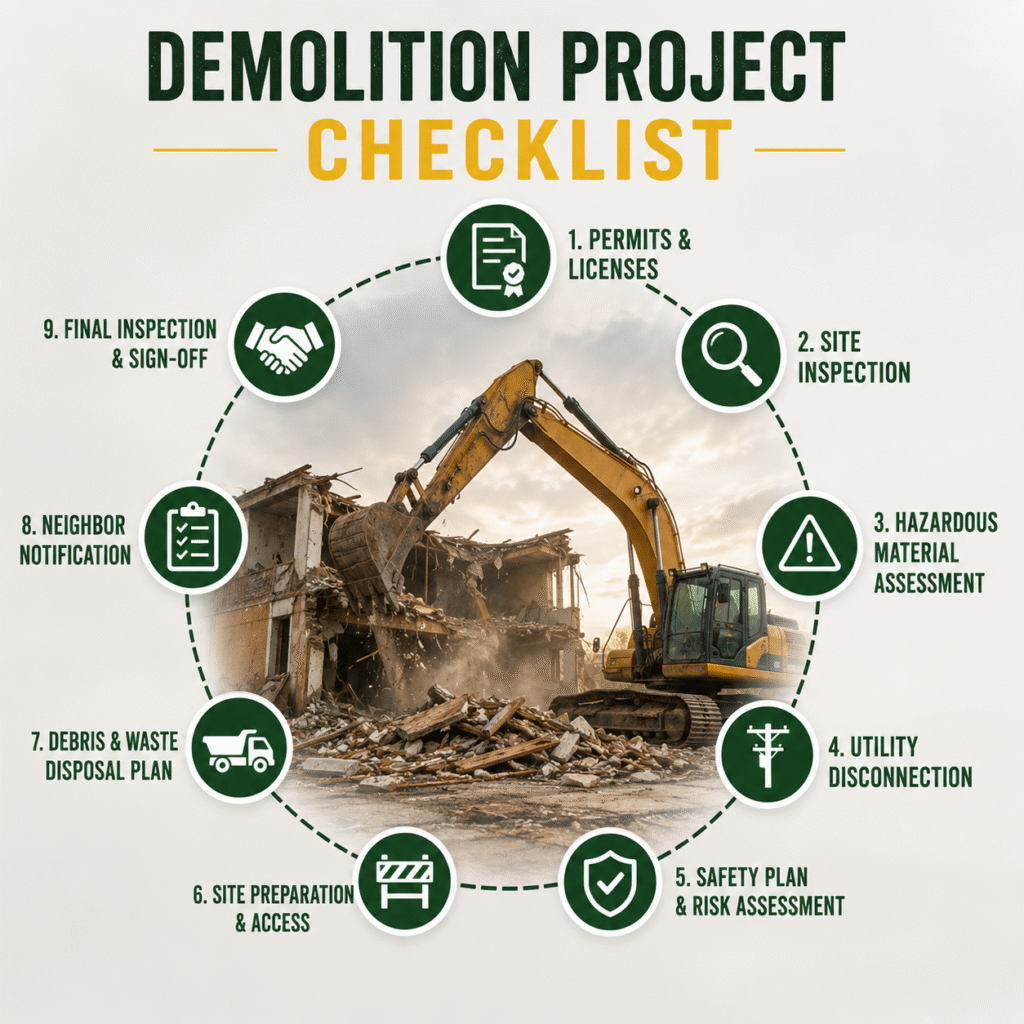
If you are planning a demolition project in Florida — whether that is pulling down a shed in Palm Bay, removing a pool in Rockledge, or gutting a commercial property in Melbourne — the essential checklist for safe demolition projects starts long before your contractor arrives with equipment. It starts with paperwork, phone calls, and inspections that most property owners do not know they need.
Florida has some of the most specific pre-demolition requirements in the country. Between state-level asbestos notifications, Brevard County building permits, utility disconnections, and pest inspections, missing even one step can stop your project before it starts — or result in fines that cost more than the demolition itself.
This guide is written for Florida property owners, not contractors. It explains what you need, why you need it, and what happens if you skip it — without the jargon.
Step One — Get Your Demolition Permit from Brevard County
Every demolition project in Brevard County requires a building permit. This applies to complete structure removals, partial demolitions, pool removals, shed teardowns, mobile home removals, and in some cases, significant interior work. Brevard County issues residential demolition permits for the removal of complete structures or parts of structures, including single family homes, two-family dwellings, manufactured homes, and accessory structures such as sheds, pools, carports, and screen enclosures.
The permit application is submitted through Brevard’s Advanced Service Site — known as BASS — which is the county’s online permitting portal. Licensed contractors registered as online users can apply, upload documents, monitor their application, schedule inspections, and pay fees 24 hours a day. If your contractor tells you no permit is needed for a standard residential structure removal in Brevard County, that is incorrect.
Do not start demolition without a permit in hand
Unpermitted demolition in Brevard County can result in stop-work orders, fines, and complications when it comes time to sell or develop the property. The permit is not a formality, it is legal authorization for the work to begin.
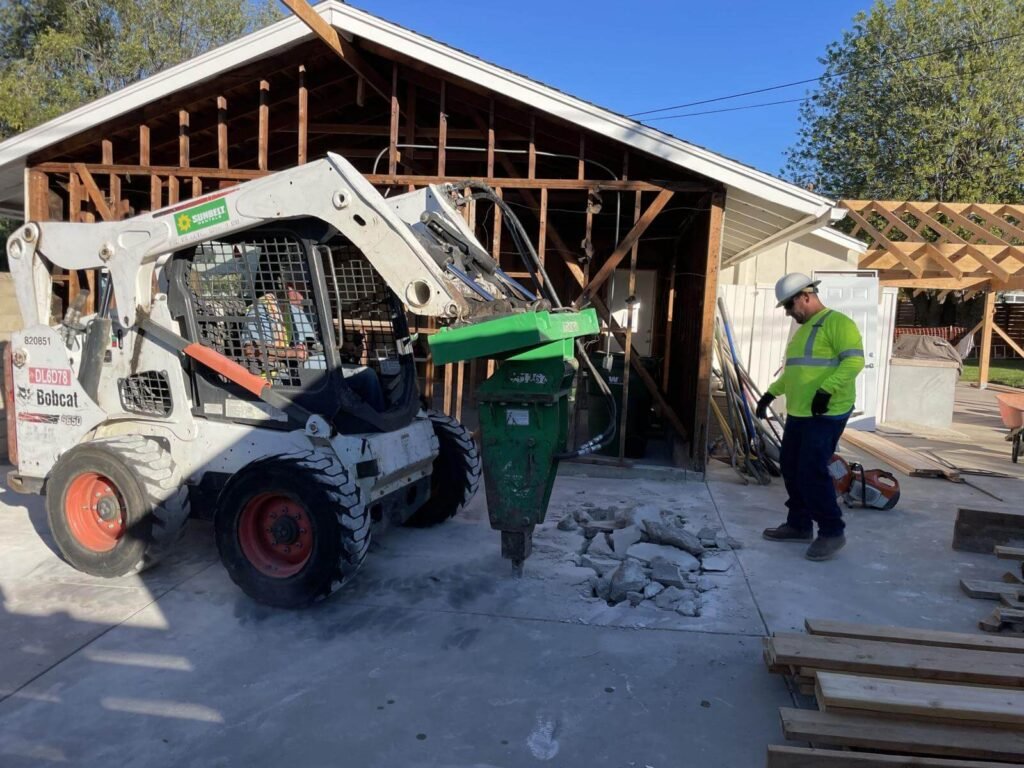
Step Two — Notify Florida DEP at Least 10 Working Days Before Work Begins
This is the step that catches most Florida property owners off guard. Separate from your county building permit, Florida state law requires a Notice of Renovation or Demolition to be submitted to the Florida Department of Environmental Protection (DEP) before any demolition begins — regardless of the building’s age, size, or condition.
This Notice of Renovation or Demolition form must be postmarked or received at least 10 working days before the project start date and submitted to the appropriate DEP district office or local air program office. The 10 working day requirement is firm. A county building permit does not satisfy this requirement — they are two completely separate submissions.
As of March 2025, Florida DEP updated its fee schedule for asbestos notifications. The new fee structure is a flat fee of $200 for any notification submitted via hard copy or electronically where a pay later invoice is generated, or a discounted fee of $100 if the notification is submitted electronically and the pay now feature is used to submit the associated fee payment simultaneously in the DEP Business Portal.
Most licensed demolition contractors handle this submission as part of their service. If yours does not, it is worth asking directly — and confirming in writing that it has been filed before your project start date is scheduled.
Step Three — Asbestos Inspection Before Any Teardown
Florida takes asbestos seriously. All demolition projects involving structures — regardless of age — are subject to asbestos notification requirements enforced by the Florida Department of Environmental Protection, under Florida Administrative Code Rule 62-257 and Federal EPA NESHAP (40 CFR Part 61, Subpart M). This applies to residential, commercial, and public buildings.
Buildings constructed before 1980 are the most common concern. Most structures built prior to 1980 have asbestos containing materials in them. These can include floor tiles and adhesives, shingles and siding, roofing, popcorn ceiling material, joint compound, and insulation. But the requirement to assess and notify does not disappear just because your building was built more recently — asbestos-containing products were used well into the 1980s and 1990s in some categories.
The inspection must be conducted by a Florida-licensed asbestos consultant. Asbestos inspections must be conducted by a Florida-licensed asbestos consultant. The inspection report forms part of your DEP notification package. If asbestos is found, abatement must be completed by a licensed contractor before demolition can proceed.
You cannot handle asbestos yourself.
Florida Statutes Chapter 469 requires that asbestos surveys, operation and maintenance plans, abatement specifications, and monitoring all be conducted by licensed professionals. Attempting to remove asbestos without a license is a violation of state law and carries significant penalties.
Need a licensed demolition contractor in Brevard County?
Dumpsters Wiz handles permits, asbestos coordination, teardown, and full debris removal — one team, one call.
Step Four — Disconnect All Utilities Before Work Begins
A demolition project with active utilities is a serious safety risk. Gas leaks, electrical fires, and water damage during teardown are not rare occurrences — they happen when utility disconnections are skipped or done incorrectly. Every utility serving the structure must be properly disconnected, capped, and verified before your demolition contractor picks up a tool.
In Brevard County, this means obtaining sign-offs from your utility providers. You must obtain proof of utility disconnections for water, gas, electric, and sewer as part of your demolition permit application. These are not self-certifications — each utility provider confirms the disconnection independently, and most building departments require written confirmation before issuing final permit approval.
There is one utility step that many people overlook completely. Any demolition involving sub-surface work requires an 811 underground utility locate before work begins. This is a free service that marks the location of buried lines on your property. Cutting through an unmarked underground gas or power line is one of the most preventable — and most dangerous — accidents on any demolition site.
- Full Junk Removal in Brevard County — Single Items to Whole-Home Loads
- Property Cleanout Services — Full House Clearouts in Brevard County
- Tenant Cleanout Services — Post-Tenancy Furniture & Debris Removal
- Dumpster Rental in Brevard County — For Bigger DIY Projects
- How Much Does a Full Property Cleanout Cost in Brevard County?
Step Five — Rodent and Pest Clearance
This one surprises most people, but it is a genuine requirement in many Florida municipalities. Before demolition begins, a licensed pest control company must inspect the property and provide a clearance letter confirming the structure is free from rodents and pests. The reason is straightforward — when a structure is demolished, any rodents living inside it will scatter to neighboring properties.
If pests are found during the inspection, extermination must be completed before demolition can proceed. The clearance letter is then submitted as part of your permit package. In Brevard County, this requirement is most commonly enforced on full structure demolitions and should be confirmed with your county building department or your demolition contractor before scheduling your project.
Step Six — Structural Assessment and Demolition Plan
A structural assessment tells your demolition team where the load-bearing elements of a structure are, how the building is expected to come down, and whether any sections pose an unexpected collapse risk. For partial demolitions — where only part of a structure is being removed — this assessment is essential. Removing the wrong wall in a partial teardown can compromise the structural integrity of what remains.
The demolition plan itself — sometimes called a site plan — may need to be reviewed and stamped by an engineer or architect depending on your project scope. For straightforward residential teardowns like a shed or detached garage, a formal engineering report may not be required. For anything more complex — a mobile home, a commercial structure, or a partial interior demolition — your contractor should be able to advise on what level of planning documentation Brevard County will require.
If you are working with Dumpsters Wiz for demolition services in Brevard County, we manage the permitting process and site assessment coordination as part of the project — you do not have to navigate it alone.
After Demolition — Debris Removal and Site Clearance
Brevard County Building Permit
Applied through BASS portal. Required before work begins on any structure — residential or commercial.
Florida DEP Notice of Demolition
Submitted at least 10 working days before start date. Separate from the county permit. Fee: $100–$200.
Asbestos Inspection by Licensed Consultant
Required for all structures regardless of age. Report submitted with DEP notification.
Asbestos Abatement (if required)
Must be completed before demolition begins. Licensed Florida contractor only
Utility Disconnections — All Services
Electric, gas, water, sewer, communications. Written confirmation from each provider required.
811 Underground Utility Locate
Required before any sub-surface or ground-disturbing work. Free service — call 811.
Rodent & Pest Clearance Letter
Issued by licensed pest control company. Confirms structure is free from pests before demolition.
Sewer Cap or Plug
Required on full structure demolitions to prevent contamination of the sewer line.
Structural Assessment
Confirms load-bearing elements and safe teardown sequence, especially for partial demolitions.
Neighbor Notification (Recommended)
Not always legally required but strongly advised — particularly in residential neighborhoods.
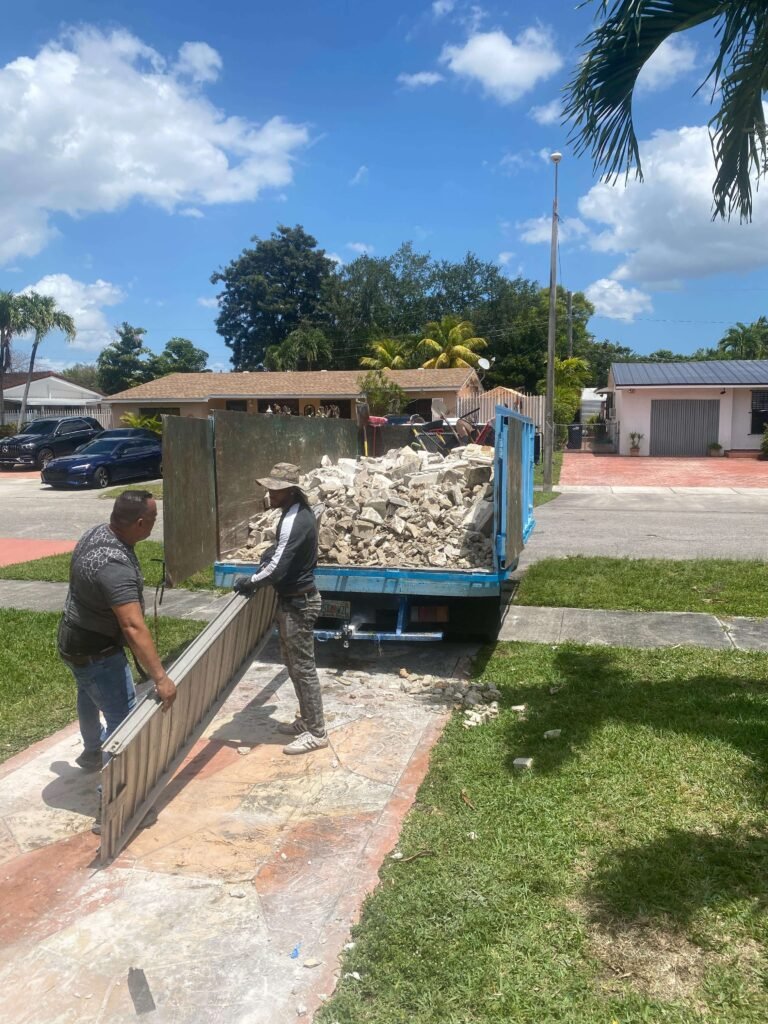
After Demolition — Debris Removal and Site Clearance
Once the structure is down, the job is not done. Debris from a demolition project — broken concrete, wood framing, roofing materials, insulation, drywall, and general construction waste — must be removed and disposed of responsibly. In Brevard County, demolition debris cannot simply be left on site indefinitely, and not all materials can go to standard landfills.
This is where having one team handle both the demolition and the debris removal makes a significant difference. Rather than coordinating a demolition contractor and then separately arranging a junk removal or dumpster rental in Brevard County, a single team manages the full process from teardown to clean site. That means less scheduling, lower overall cost, and a faster turnaround — particularly important if the property is being prepared for sale, renovation, or a new build.
Materials like pressure-treated wood, lead-containing components, and any remaining hazardous materials identified during the asbestos inspection must be disposed of at approved facilities. Your demolition contractor should be able to account for these at the planning stage — not as a surprise after the site is cleared.
Need demolition and debris removal handled together in Brevard County?
One local team for the full job — from permits to clean site. Free on-site estimate available.
What Makes Florida Demolition Different From Other States
Florida’s demolition regulations are stricter than many states for a few specific reasons that are worth understanding. The combination of aging housing stock, extreme weather exposure, high humidity, and a large population of older buildings means the state takes environmental contamination — particularly asbestos — more seriously than most.
The mandatory DEP 10-day notification applies to every structure in Florida, not just those known to contain asbestos. This is different from several other states where the notification requirement only kicks in when asbestos is confirmed. In Florida, the notification is required first, and the inspection determines whether abatement is needed. That sequence matters for your project timeline — the 10 days cannot be compressed, and the permit clock does not start until the notification is filed.
Florida’s humidity also accelerates the growth of mold in older structures. While mold is not regulated in the same way as asbestos, it can be a factor in both health risk and disposal requirements when debris is removed. A thorough pre-demolition survey should flag any significant mold presence, particularly in structures that have experienced water damage.
Frequently Asked Questions — Florida Demolition
Do you need a permit for demolition in Brevard County FL?
Yes. Every demolition project in Brevard County requires a permit from the county Building Department before work begins. This applies to residential structures, commercial buildings, accessory structures, pools, and manufactured homes. Applications are submitted through Brevard’s BASS online portal. Unlicensed demolition without a permit can result in fines and stop-work orders.
How far in advance do you need to notify Florida DEP before demolition?
Florida law requires a Notice of Renovation or Demolition to be submitted to the Florida DEP at least 10 working days before work begins. This is separate from your county building permit — both are required. As of March 2025, the filing fee is $100 if submitted electronically with payment, or $200 if submitted via hard copy or with a pay-later invoice.
Is asbestos testing required before demolition in Florida?
Yes. Florida requires an asbestos inspection by a Florida-licensed asbestos consultant before demolition of any structure — regardless of its age. The inspection report is submitted as part of the DEP notification. If asbestos is found, abatement by a licensed contractor must be completed before demolition proceeds. Buildings built before 1980 are most likely to contain asbestos materials.
Who handles demolition permits in Brevard County?
Demolition permits in Brevard County are issued through the Brevard County Planning and Development Department Building Permits division. Applications are submitted online through the BASS portal. Most licensed demolition contractors handle permit applications as part of their service — Dumpsters Wiz manages the full permitting process for every demolition project we take on in Brevard County.
Does Dumpsters Wiz handle demolition permits and debris removal together?
Yes. Dumpsters Wiz handles the complete demolition process in Brevard County — permit coordination, asbestos inspection referrals, the teardown itself, and full debris removal and site clearance. One team, one invoice, no need to coordinate multiple contractors. Call (321) 376-1661 for a free on-site estimate.
Skip the Permit Headaches — We Handle It All
Same-day service available in Melbourne, Palm Bay, and Rockledge. One call and we manage permits, teardown, and cleanup — start to finish.
Ready to Get That Demolition Done Right?
Same-day service available across Brevard County. One call gets you a locked price and a confirmed date — permits handled, debris removed, no surprises.
A phone call is faster than an online form for same-day sofa removal. Call before noon for the best chance of same-day availability in Melbourne and Palm Bay.